



Play for Peace® Workshop at UEF: Creating Safe and Connected Spaces in the Workplace
On 3 and 4 October 2026, at the initiative of our close friends at BeStu, the Service-Learning Center at the University of Economics and Finance, Ho Chi Minh City (UEF) co-organized the workshop "Applying Play for Peace® in the Workplace." The workshop was led by two facilitators certified by Play for Peace, who came from India. Through cooperative games, hands-on activities and discussion, participants experienced how Play for Peace builds connection, a sense of safety and inclusion within a group.
Play for Peace is a grassroots non-profit organization founded in 1998. It brings together children, young people and organizations from communities affected by conflict, using cooperative play to build connection, compassion and peace.
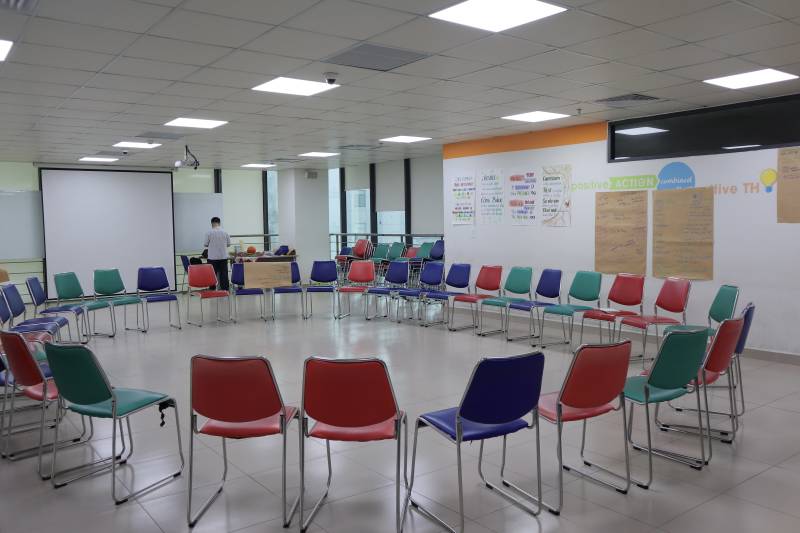
The workshop was facilitated by Swati Bhatt and Agyatmitra, who have been involved with Play for Peace since the program was introduced in India in 2000. Over the past 25 years, they have worked with organizations including Save the Children, Plan International, Oxfam GB, Catholic Relief Services, World Vision and Jesuit Refugee Services. Their work has taken them across India, Sri Lanka, Myanmar, Nepal, South Sudan, Greece, Afghanistan and Vietnam, working in schools, underserved communities and refugee camps.
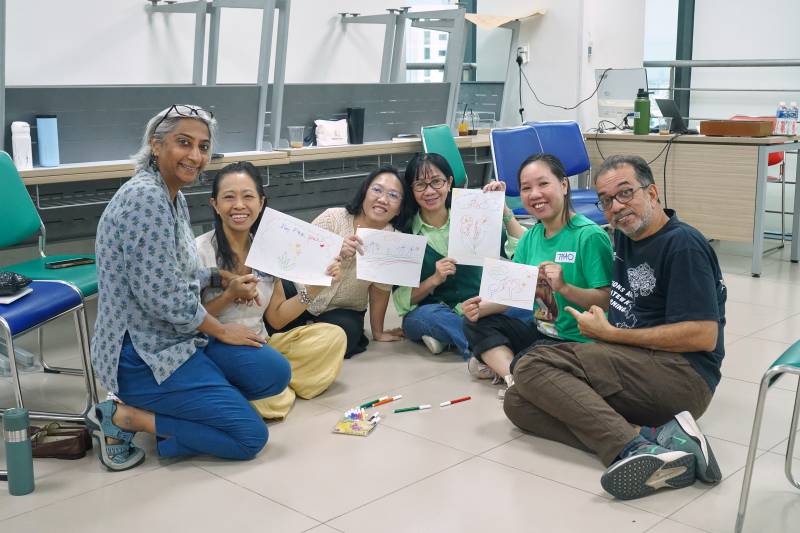
Day 1: Experiencing Play for Peace and Looking at Inclusion
The first day began with experience rather than theory. Through a series of activities, participants were invited to connect with themselves, the facilitators, one another and the space they were sharing. This reflected one of the ideas at the heart of Play for Peace: “connection before content.”
During the Practice Peace session, participants explored four values that guide Play for Peace: inclusion, cooperation, safety and fun.
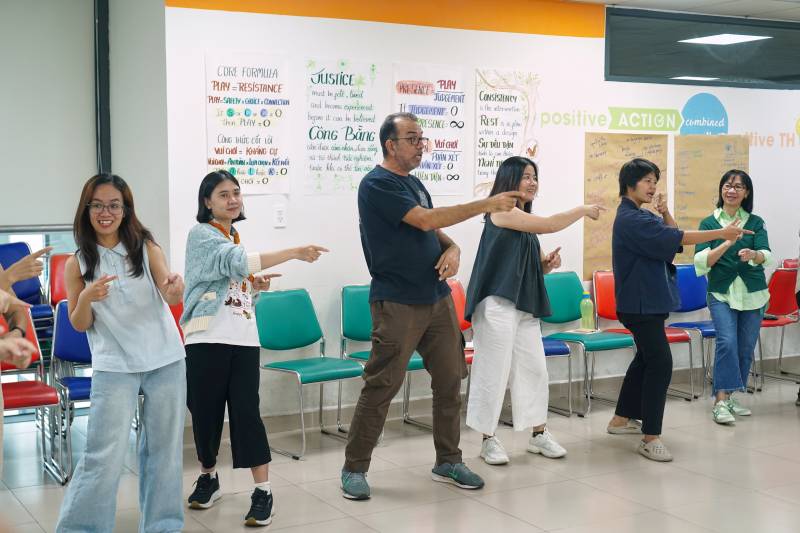
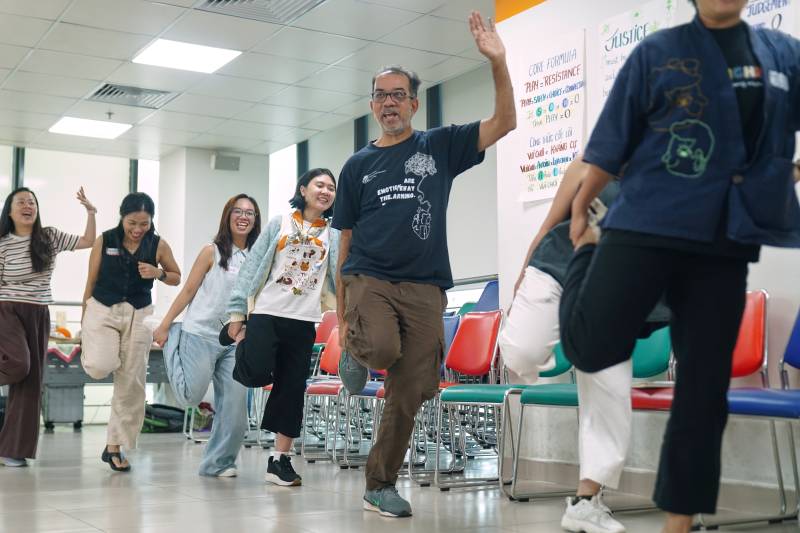
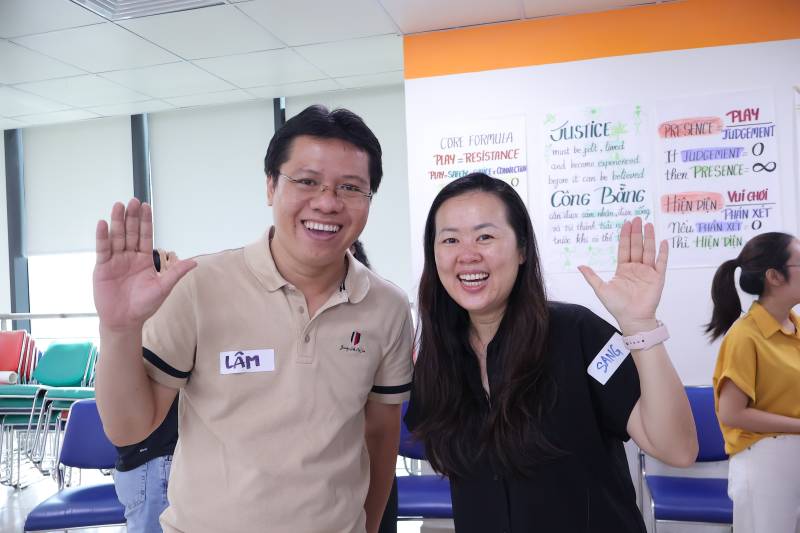
Safety was discussed through the PIES model, which looks at four dimensions: physical, intellectual, emotional and social safety. In practice, this means creating a space where people can choose how they participate, express a different opinion without being laughed at, admit that they do not know something and still feel accepted as they are.
As Dr. Gabor Maté puts it, “Safety is not just the absence of threat but also the presence of connection.”
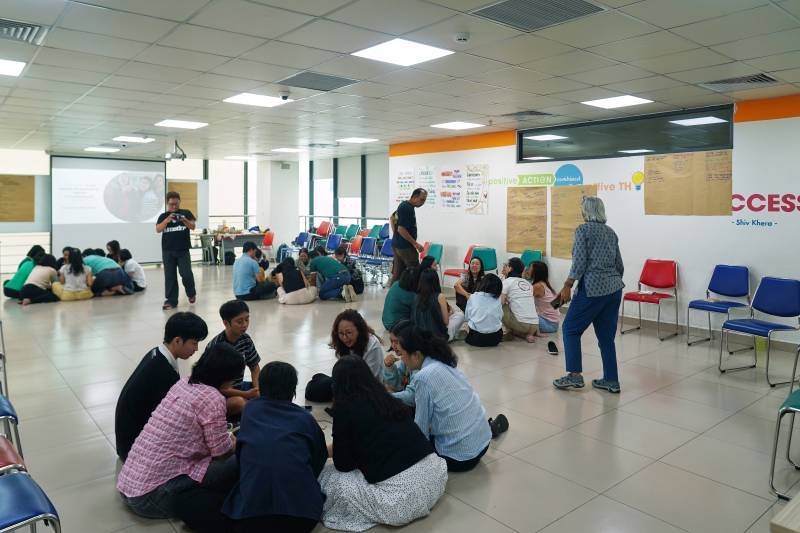
The group also spent time looking at icebreakers and what makes them effective. Rather than treating an icebreaker as a quick game at the beginning of a session, the facilitators approached it as part of a longer process of building trust. The best activities are often simple, low-pressure, interactive and genuinely enjoyable. Participants were also introduced to some of the science behind play. Cooperative activities can influence chemicals and hormones associated with wellbeing and social connection, including endorphins, dopamine, serotonin and oxytocin. This helps explain why playing together can affect mood, motivation, confidence and trust within a group.
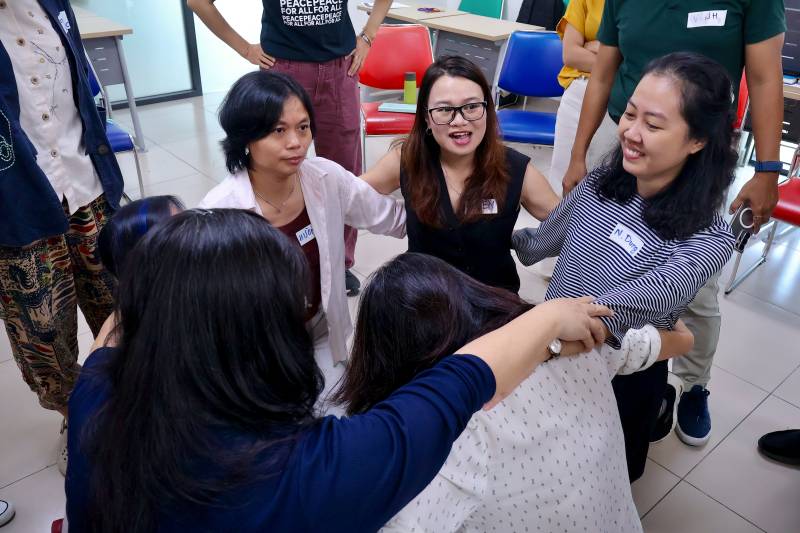
The first day ended with a session on from self-care to mpathy, followed by time for reflection on the day’s experiences.
Day 2: Facilitation, Community Building and Action
The second day shifted the focus to facilitation and community building.
Participants explored how a group can gradually develop from an initial icebreaker into a community where people trust one another, share responsibility, communicate openly, work through differences, solve problems together and eventually take collective action. They also had opportunities to facilitate activities themselves. For many, this made one point especially clear: facilitation is not simply about delivering instructions or knowledge. The way a facilitator listens, responds, participates and relates to the group can shape the experience just as much as the activity itself.
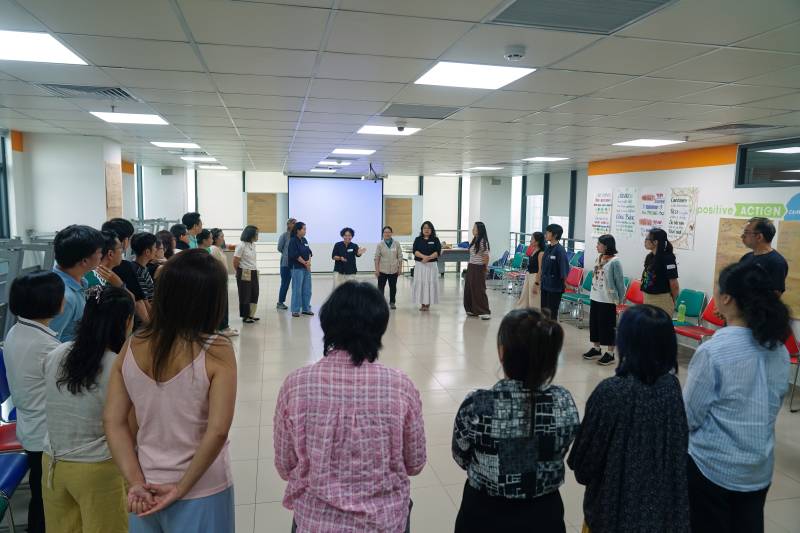
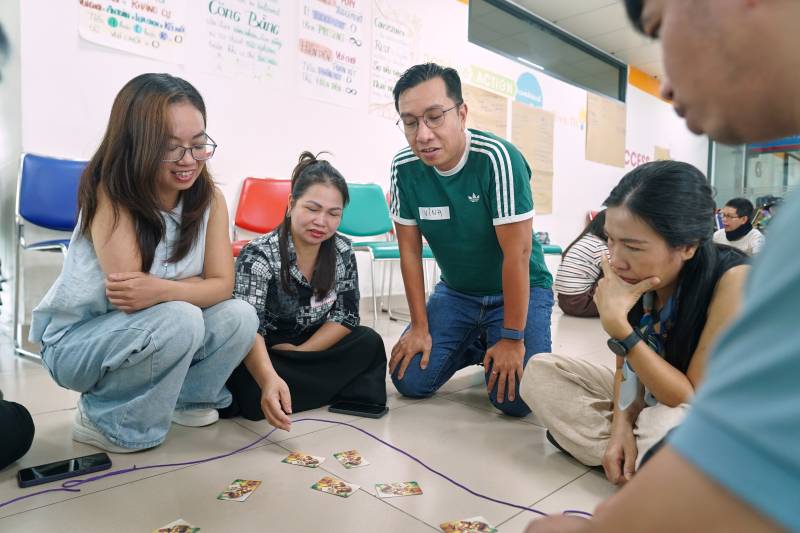
Power sharing was another important part of the discussion. Instead of keeping control entirely with the facilitator, Play for Peace encourages participants to have a genuine role in shaping the experience. This can be as simple as offering choices, allowing someone to say “pass,” sharing responsibilities with the group, joining the circle rather than standing outside it, inviting different voices and resisting the urge to provide an immediate solution.
The facilitators also introduced the idea of “micro-justice”: small moments of fairness that happen in everyday group interactions. When people are treated fairly when mistakes happen, have similar opportunities to participate and are involved in shaping the rules of the group, they are more likely to develop a sense of agency, safety and belonging.
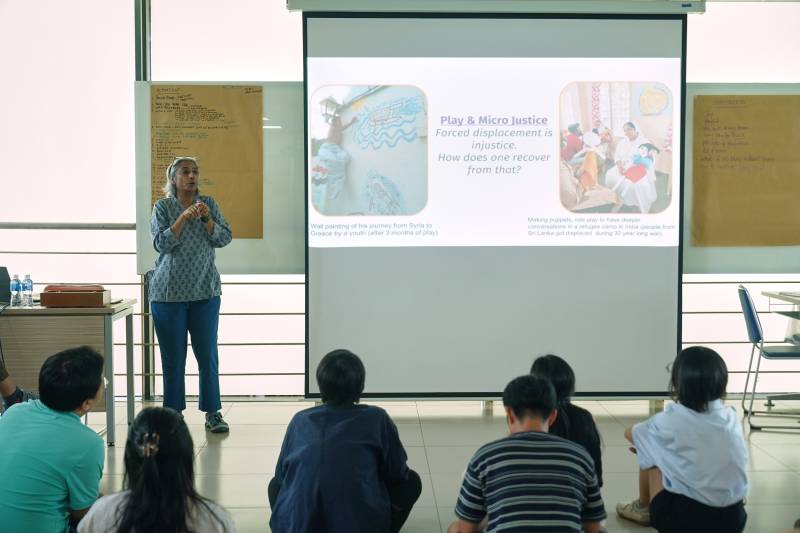
Stories from refugee camps and underserved communities in India and Greece gave these ideas a more concrete context. They showed how play, when thoughtfully facilitated, can do more than entertain. It can help people reconnect, regain confidence and feel that they have a place within a community.
The workshop ended with action planning. Each participant identified a community where they could put some of these ideas into practice, whether with kindergarten teachers, parents, students, colleagues or within their own workplace.
Continuing the Journey
The two-day workshop was not intended to be the end of the experience. Following the program, the UEF Service-Learning Center and BeStu will make space available on Sundays for members of the Play for Peace community to continue meeting, practicing and learning together. Individuals and organizations interested in joining the community, volunteering or connecting Play for Peace with communities that may benefit from the approach can contact the Center for further information.
The workshop is part of the UEF Service-Learning Center’s ongoing work to bring experiential learning into practice and create more opportunities for people to develop facilitation skills, strengthen relationships and build learning and working environments where people feel safe, connected and able to participate.
News: UEF Service-Learning Center
Photos: Quỳnh Như - Lê Khôi - Ngọc Tân


