Workshop “Leveraging AI for Research While Maintaining Academic Integrity”
08/12/2026
Artificial intelligence is opening a new chapter in education and research. Searching for literature, analyzing data, and developing ideas have become faster than ever. Alongside these opportunities, however, an increasingly important question is emerging in academia: How can we harness the power of AI while preserving independent thinking and upholding standards of research integrity?
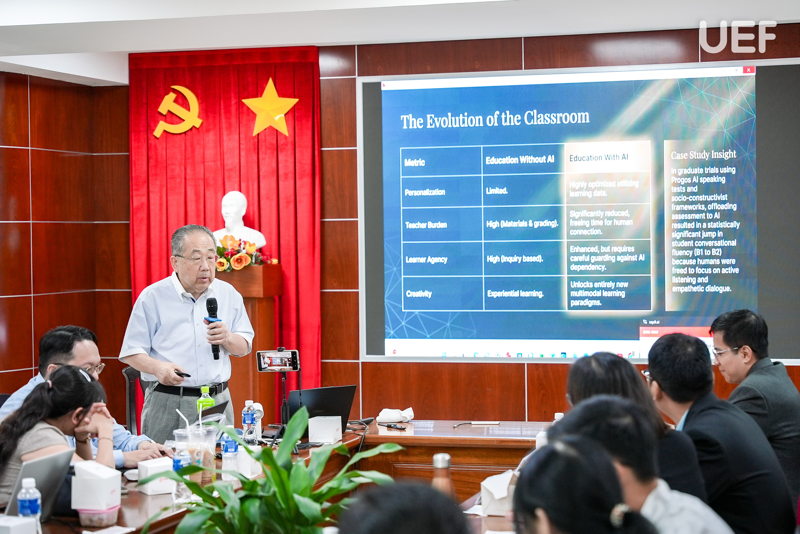
On the morning of August 12, the Faculty of English organized the workshop “Leveraging AI for Research While Maintaining Academic Integrity,” in collaboration with Professor Hiroyuki Obari from the Department of Global Business, Globiz Professional University, Japan.
The program provided an international perspective on the application of AI in research, teaching, and learning, while highlighting important principles for using technology responsibly in academic settings.
Fostering Responsible Research Thinking in the AI Era
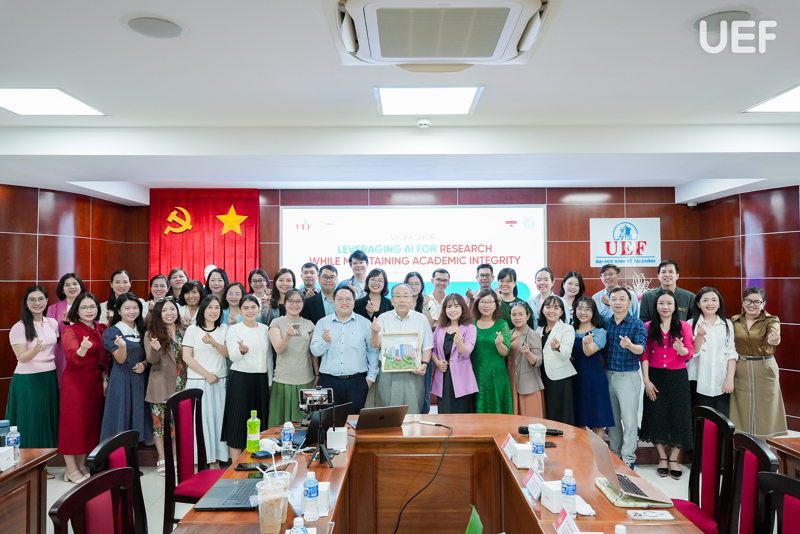
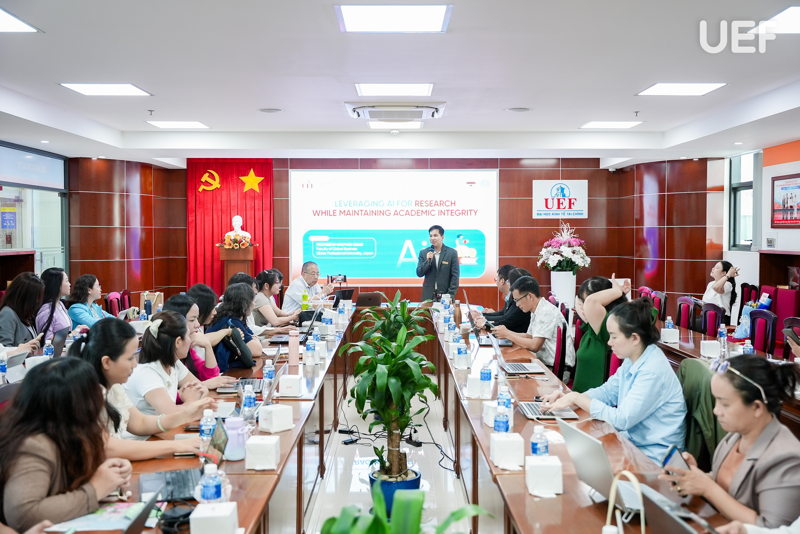
The workshop was attended by Assoc. Prof. Dr. Phạm Huy Cường, Dean of the Faculty of English; Assoc. Prof. Dr. Dương Mỹ Thẩm, Vice Dean; M.A. Nguyễn Đình Tuấn, Vice Dean; and M.A. Hoàng Thị Ngọc Hiền, Dean’s Assistant, along with lecturers from various units across the University. The event also attracted a large number of graduate students in English Language Studies who were interested in the topic.
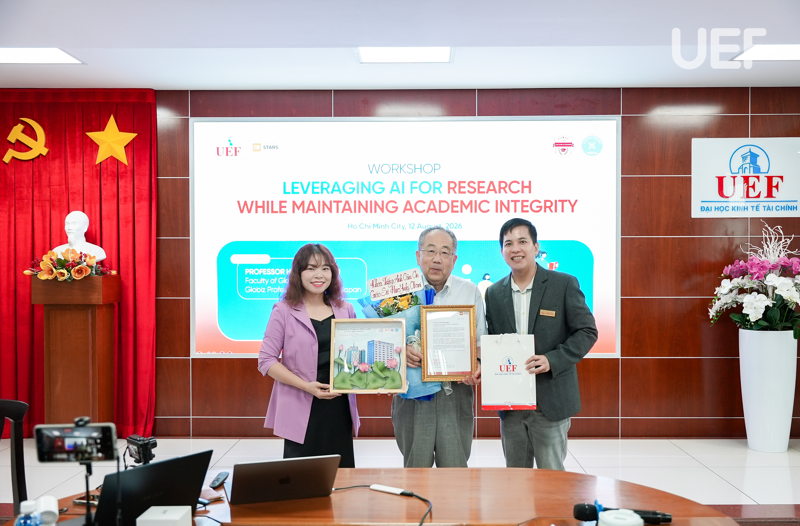
The Faculty of English expressed its appreciation to Professor Hiroyuki Obari for his valuable participation and insights.
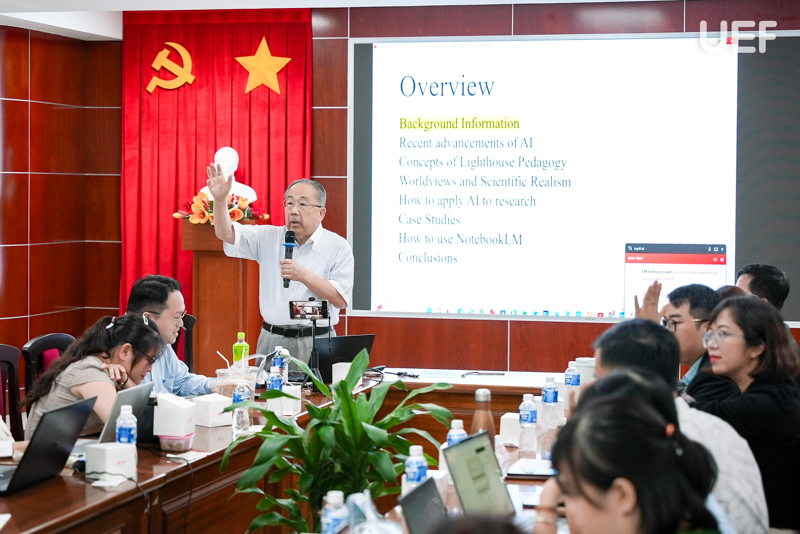
In the opening session, Professor Hiroyuki Obari provided an overview of the development of artificial intelligence and the changes it is bringing to higher education. From recent advances in AI to the concept of Lighthouse Pedagogy—a learner-centered pedagogical model for the digital age—the speaker emphasized that AI is no longer a future trend but has already become part of contemporary academic practice.
According to Professor Obari, AI literacy refers to the ability to understand how AI works, recognize the limitations of the technology, and make responsible judgments when applying it to research or teaching. It is the combination of technological understanding and critical thinking that enables researchers to adapt effectively to the changing academic landscape.
AI Can Support Research, but It Cannot Replace Researchers
Focusing on the workshop’s central theme, Professor Obari introduced various ways AI can be incorporated into the research process, from searching for and synthesizing literature, developing research questions, and analyzing data to outlining, academic editing, and standardizing citations. Tools such as NotebookLM, along with a range of real-world research scenarios, were used to illustrate how AI can serve as an effective “academic assistant” when used appropriately.
At the same time, the speaker examined the other side of the issue. The risks of misinformation, AI hallucinations, and excessive reliance on AI can directly affect the quality and reliability of research. Therefore, all AI-generated information should be cross-checked against original sources, while researchers must be transparent about the extent to which AI has been used, in accordance with the policies of individual journals or educational institutions.
The key point is that AI can support the research process but cannot replace human thinking. Selecting a theoretical framework, designing research methods, interpreting findings, developing arguments, and drawing scholarly conclusions remain the responsibility of the researcher. Technology can create genuine value only when it supports an independent, critical, and evidence-based thinking process.
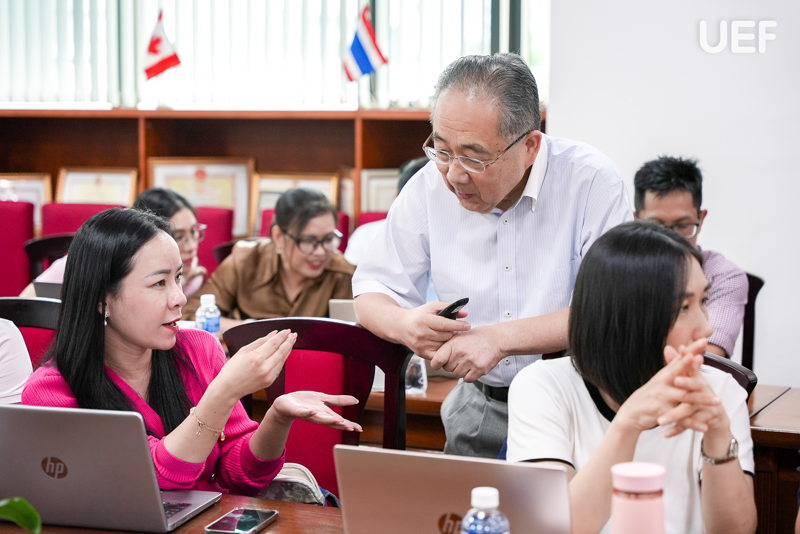
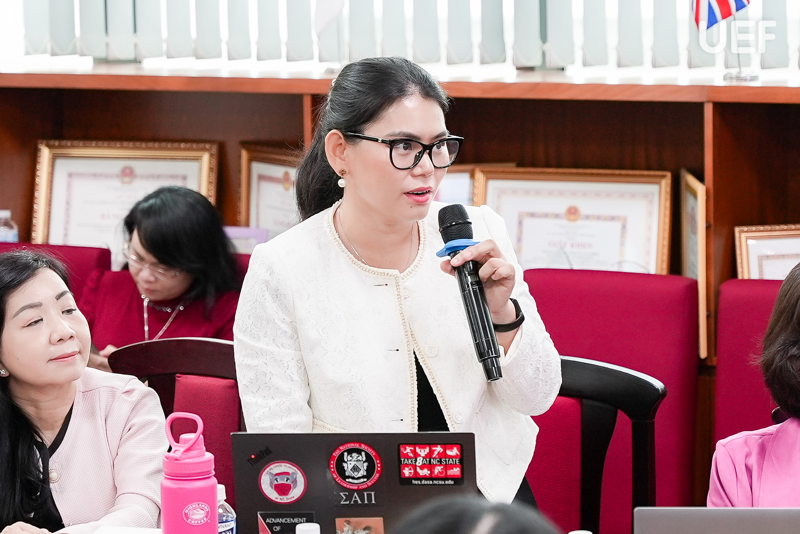
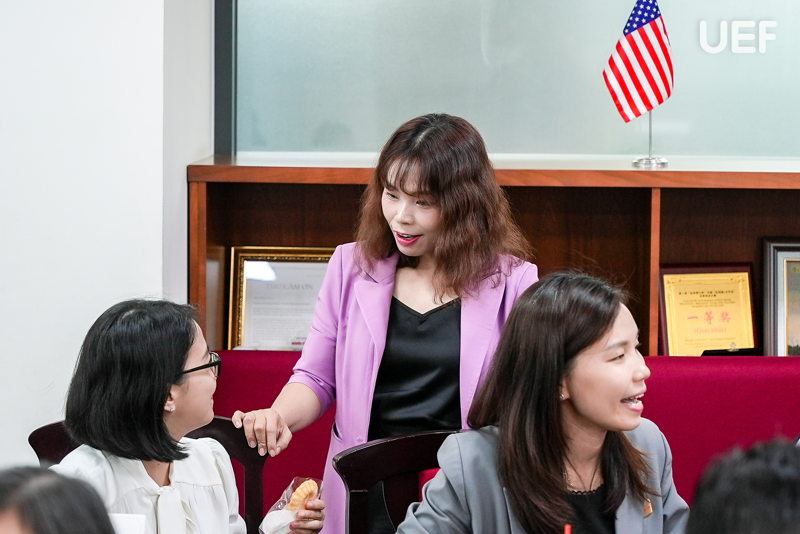
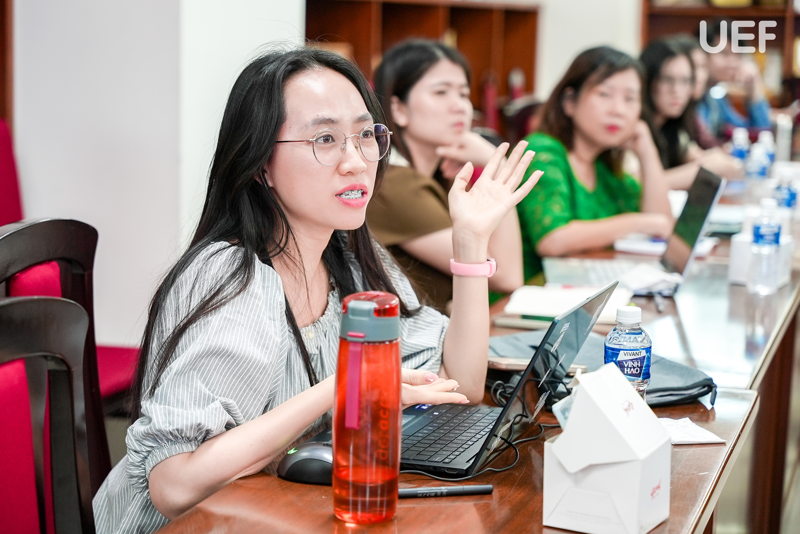
The workshop also incorporated a number of discussion activities and Q&A sessions, giving lecturers and graduate students opportunities to engage directly with the speaker about challenges they encounter in research and teaching. Practical examples from international academic settings helped participants gain a clearer understanding of how universities around the world are developing policies and fostering cultures of transparent AI use.
Strengthening Research and Teaching Capacity in the Digital Transformation Era
The program successfully provided participants with valuable insights into emerging AI tools while highlighting an important philosophy for modern research. When integrated into a process of critical reflection, verification, and self-evaluation, AI can become a powerful catalyst for improving research quality while preserving researchers’ academic voices, independence, and the core values of scholarly integrity.