



UEF connects entrepreneurs and experts to discuss CEO competence in the era of AI and Robotics
AUGUST 18, as artificial intelligence (AI) can analyze data within seconds, Robotics can change the factory’s operation, and the Internet of Things can connect the whole system in real time, the competitive advantage of a business no longer lies in who adopts the technology first, but in who makes use of it better. This transformation, at the same time, sets new requirements for leaders.
From that perspective, the program “Business Coffee - Branch 1, Saigon Entrepreneurs Association” with the topic “CEOs’ role and competence in the era of AI and Robotics” took place in the morning of August 15. The program was organized in collaboration with Branch 1 - Saigon Entrepreneurs Association (SEA) and UEF, offering practical discussions about technology adoption, team management, and the CEOs’ role in the process of developing new competitive capabilities for businesses.
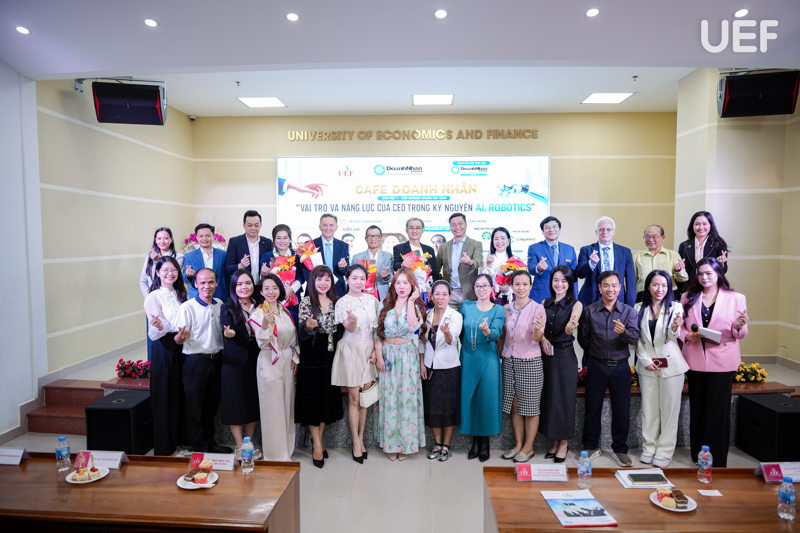
The program gathered many experts and entrepreneurs to share experiences, connect, and stay updated on industry trends
Attending the program, on behalf of UEF were Mr. Đỗ Quốc Anh - Vice Chairman of the Board of Directors, Dr. Ngô Minh Hải - Vice President, Mr. Nguyễn Xuân Hưng - Director of the Center of Project Design Education, Prof. Dr. Eric Jose Olmedo Panal - Dean of the Faculty of Tourism and Hospitality Management, and Ms. Nguyễn Thị Lan Chi - Head of Hospitality Management.
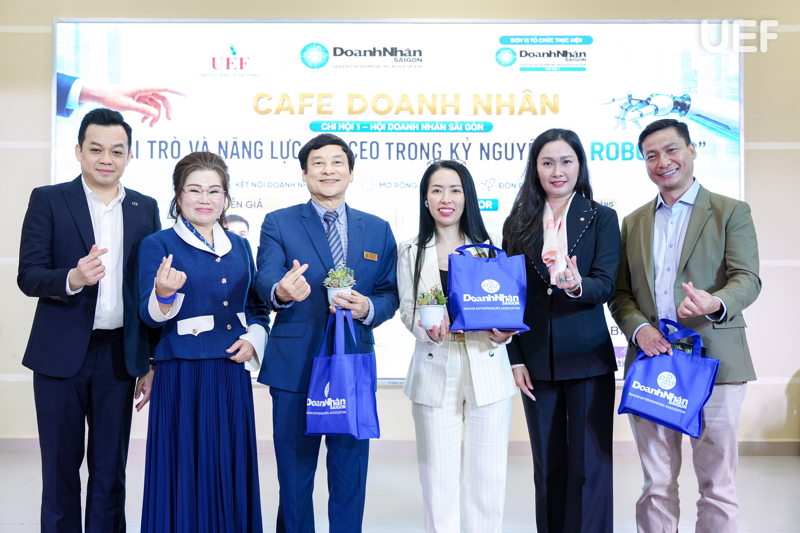
Representatives of Saigon Entrepreneurs Association presented gifts to express appreciation for UEF’s partnership
On behalf of the Saigon Entrepreneurs Association were Ms. Nguyễn Thị Ngọc Điệp - Deputy Head of the External Relations Department, Ms. Mã Đào Ngọc Bích - Vice President, Ms. Đinh Thị Thu Hà - President of Branch 1, Prof. Từ Trung Chấn - Advisor of Branch 1, along with representatives from numerous businesses, entrepreneurs, and guests.
Accompanying the program were experts from multiple fields, including Mr. Võ Quang Huệ - Former BMW, Bosch, Vingroup/Vinfast Executive, expert in technology, AI, and the automotive industry; Dr. Ngô Minh Hải - Vice President of UEF, expert in Behavioral Finance and Business Strategy; Mr. Bruce Robert Newton - Vice President of Global ColigoMed’s Human Resources, General Director of ColigoMed Vietnam. The discussion was moderated by Mr. Mã Thanh Danh - Deputy General Director of KIDO Corporation, Chairman of the Board of Directors of the International consulting company Dcensia, expert in strategy, M&A, and corporate advisory.
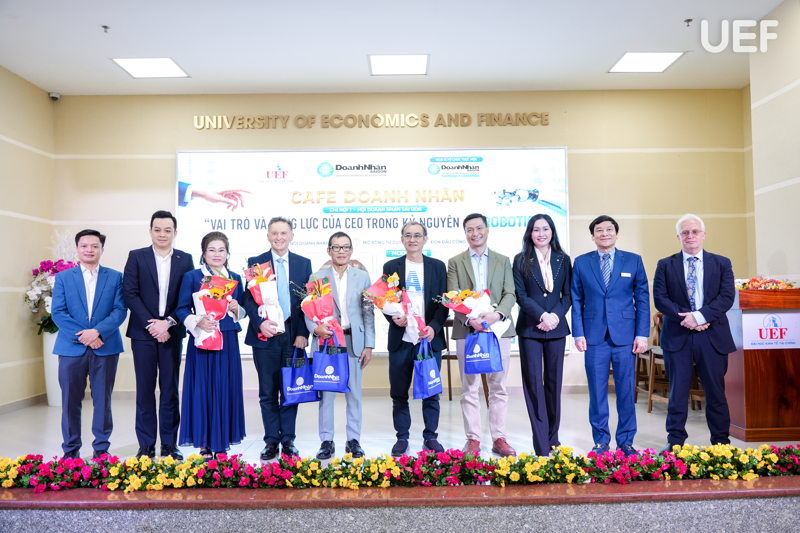
Representatives of the Organization Board presented gifts to express gratitude to speakers
A CEO in the new era must answer more questions about whether businesses should use AI or not. They must determine where to start, how much to invest, which technology should be chosen, how to ensure data security and cost control, especially how technology can create genuine value rather than becoming merely a trend-chase investment.
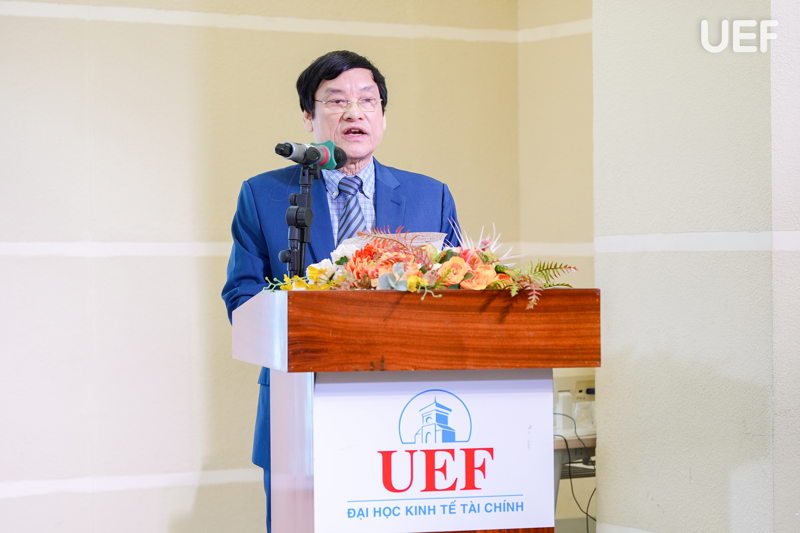
Mr. Đỗ Quốc Anh hoped to bring practical perspectives and useful values for the entrepreneur community through the program
At the beginning, Mr. Võ Quang Huệ highlighted a major shift occurring in intellectual history: knowledge is becoming increasingly widespread, and the ability to access technology is becoming more and more open. In that context, the gap between businesses does not need to be about who possesses the latest technology. The difference is increasingly decided by who learns faster, who applies better, and who has the ability to turn technology into their own capability.
From many years of experience working in big corporations and the high-speed innovation industry, Mr. Võ Quang Huệ emphasized the fundamental role of humans. Technology can change very quickly, but businesses still need discipline, quality, meticulousness, and the ability to execute every detail to turn a tool into real results.
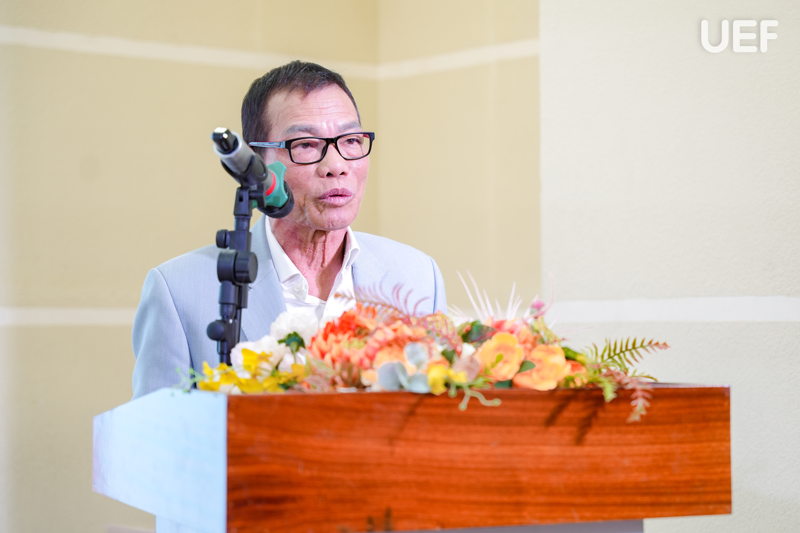
Mr. Võ Quang Huệ shared about the adaptability competence and humans’ role in the process of mastering technology
This is also the time for CEOs to reflect on the successes that established the business’s position. In a constantly changing market, the strategies that used to be successful may not be suitable anymore. Therefore, leaders need to have the courage to change, be eager to learn, and even get rid of practices that used to be effective in the past to pave the way for new abilities.
From that story, CEOs’ important competencies in the era of AI and Robotics can be seen in many aspects: the ability to learn and adapt, the capacity to translate ideas into results, the ability to combine data with human judgment, the capacity to build trust in times of uncertainty, and the ability to manage risk while maintaining long-term thinking in a world where the pace of change is rapidly accelerating.
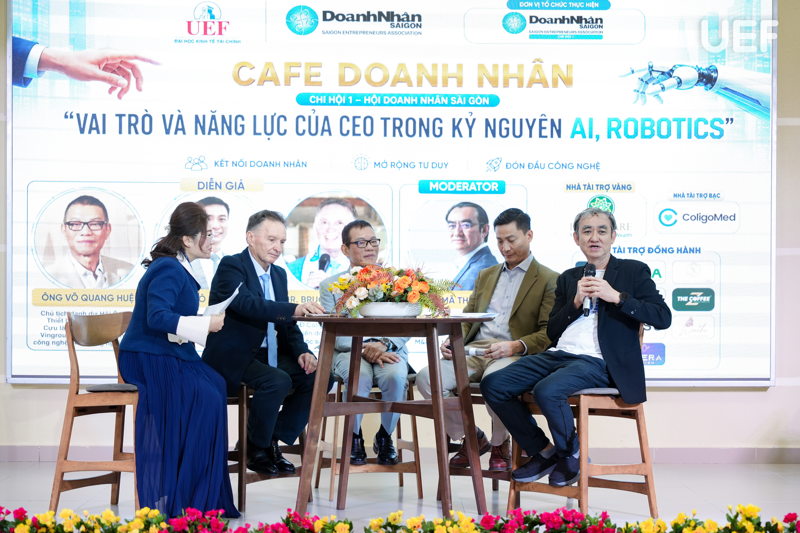
The seminar opened up many discussions about how to manage enterprises in the new era
Questions surrounding AI, Robotics, and CEOs’ roles continued to be explored in the seminar with the participation of many speakers and coordinators. From the potential for AI to replace humans to practical challenges such as cost control, data security, and building a competitive advantage, these problems are examined through the lens of businesses.
A notable issue is the “AI FOMO” mindset, where entrepreneurs are easily involved in the technology wave and trend-driven investment. The speakers emphasized that the value lies not in how many AI tools a company uses, but in how well those tools align with the company’s needs, resources and strategy. Similarly, the tendency towards lights-out factory or automation also requires consistent preparation regarding process, infrastructure, data and human resources, instead of merely replacing humans by machines. Before these shifts, entrepreneurs must turn concern into motivation for proactive adaptation.
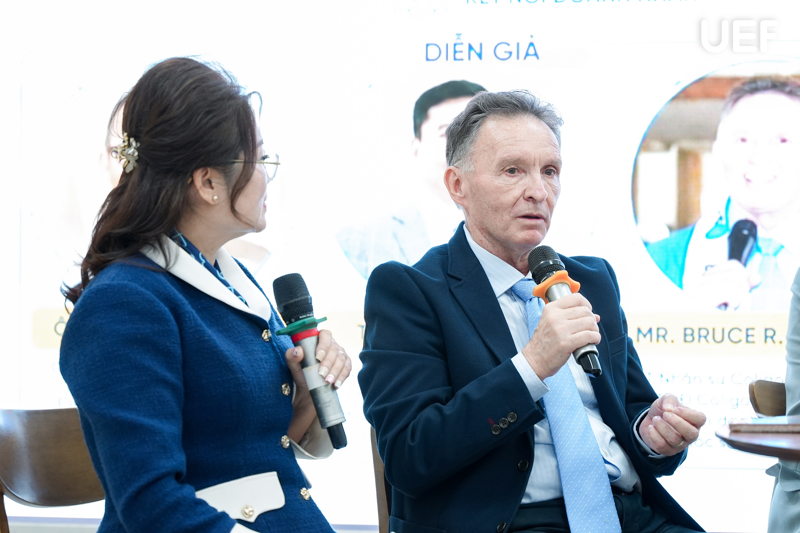
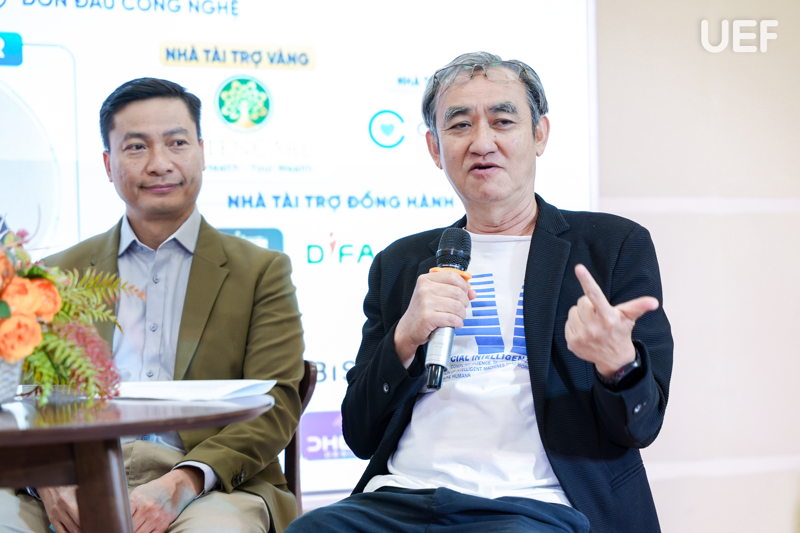
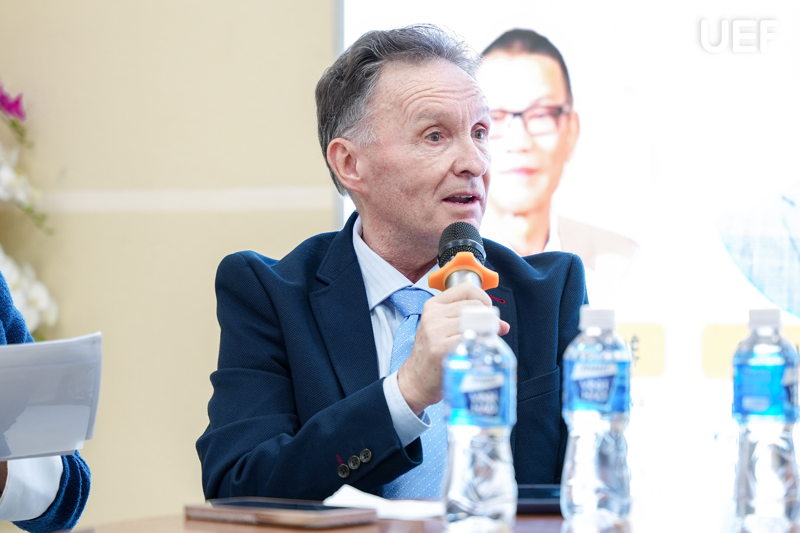
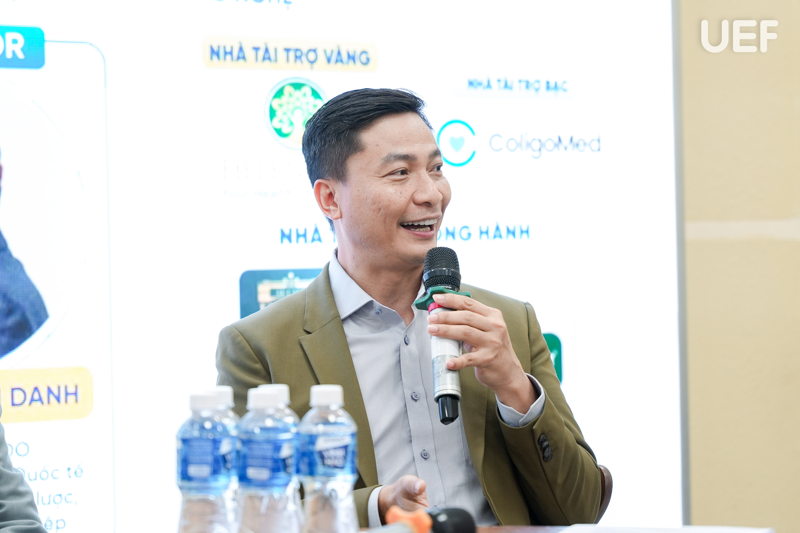
Experts answered questions about AI, Robotics, and CEOs’ competence in the context of technology development
Notably, the program highlighted the symbiotic relationship between humans and AI. Technology can assist in processing data, enhancing productivity, and optimizing multiple tasks. However, critical thinking, experience, judgment, and responsibility for making decisions still belong to humans. Therefore, the CEOs’ problem is not only to integrate AI into business operations, but also to develop a team knowing how to work with AI and not depend on it.
Closing the program, discussions about technology also returned to the core matter of management. AI and Robotics can change the business’s operation, yet the direction of an enterprise is still determined by how leaders choose, guide, and turn technology into value. In the new era, CEOs therefore need not chase after every technology, yet they need to acquire the acumen to select the right one, develop the right people, and build sustainable competitive capabilities for the organization.
Center of Information and Communication