


Business Engagement
Students Learn How to Develop Compensation and Benefits Policies in Multinational Corporations
12/10/2024
Within the framework of the Human Resource Management course’s thematic seminar organized by the Faculty of Business Administration - Ho Chi Minh City University of Economics and Finance (UEF), students had the opportunity to explore the topic “Developing Compensation and Benefits Policies for Human Resources in Multinational Corporations” from the perspective of Ms. Nguyen Phuong Anh - Talent Acquisition Manager at Busy Ming Vietnam Trading Chain Co., Ltd., on the evening of December 3rd.

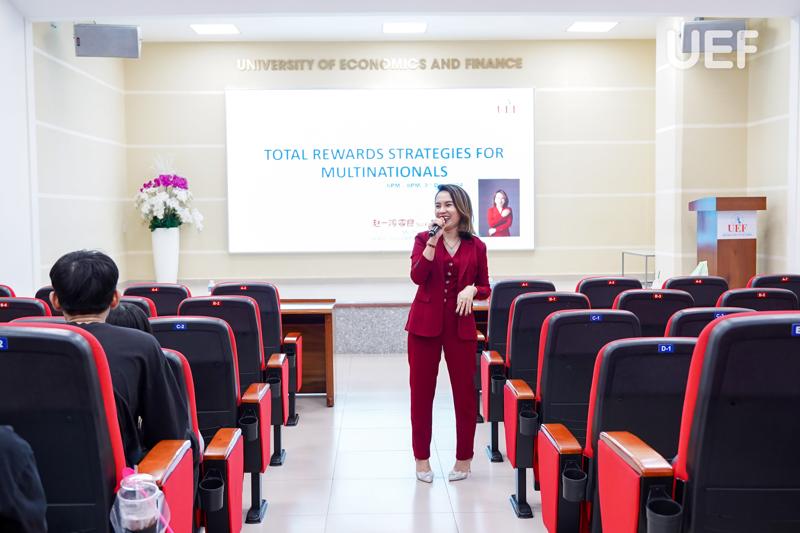
The speaker provides an overview of multinational corporations
At the beginning of the session, Ms. Nguyen Phuong Anh introduced different types of multinational corporations (MNCs), including Decentralized corporations, Centralized Global corporations, Transnational corporations, and International Divisions within corporations. Multinational corporations pursue global management and operational strategies, while also implementing different management approaches and plans tailored to each branch across countries. In contrast, domestic companies primarily focus on strategies aligned with local markets and often have advantages in understanding market characteristics and predicting customer preferences.
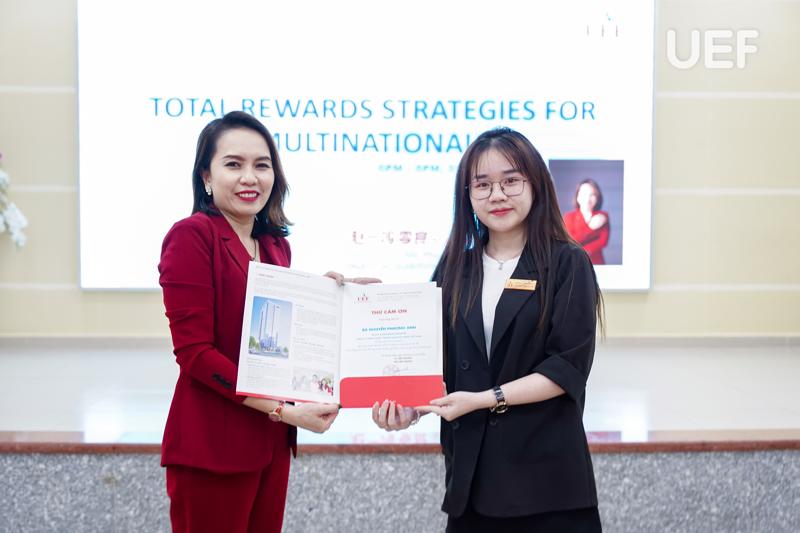
Representatives of the Faculty of Business Administration present a letter of appreciation to the speaker
In addition, the speaker elaborated on differences in compensation and benefits systems among corporations. These include mechanisms for rewarding and recognizing employees’ contributions, as well as ensuring internal equity through clearly defined criteria within compensation policies. Moreover, to maintain competitiveness in the labor market, UEF students were introduced to the importance of offering attractive compensation and benefits packages, which enable enterprises to attract talented candidates and retain existing high-performing employees.
Following the presentation, the Q&A session took place with active participation from students and the speaker. Students learned that aligning employee performance with business objectives, along with appropriate compensation policies, can motivate employees to work toward organizational goals while ensuring effective budget control. This, in turn, helps enterprises strengthen their competitive position in the labor market and reduce employee turnover rates.

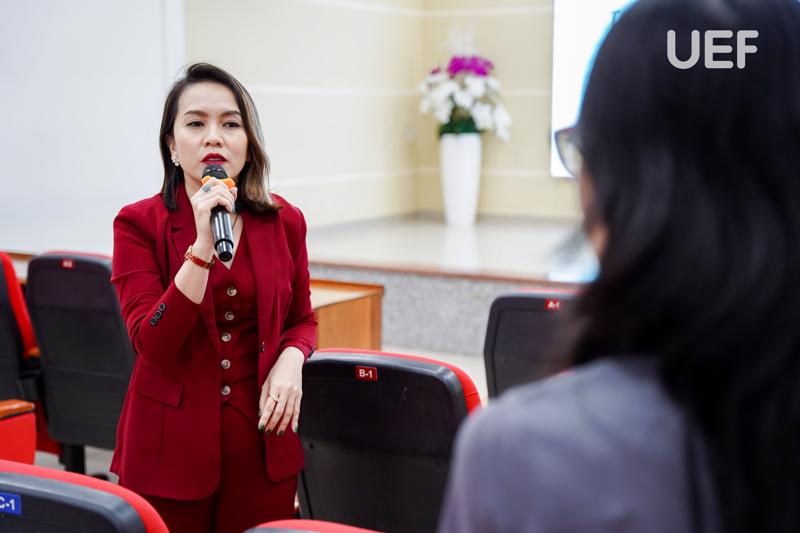
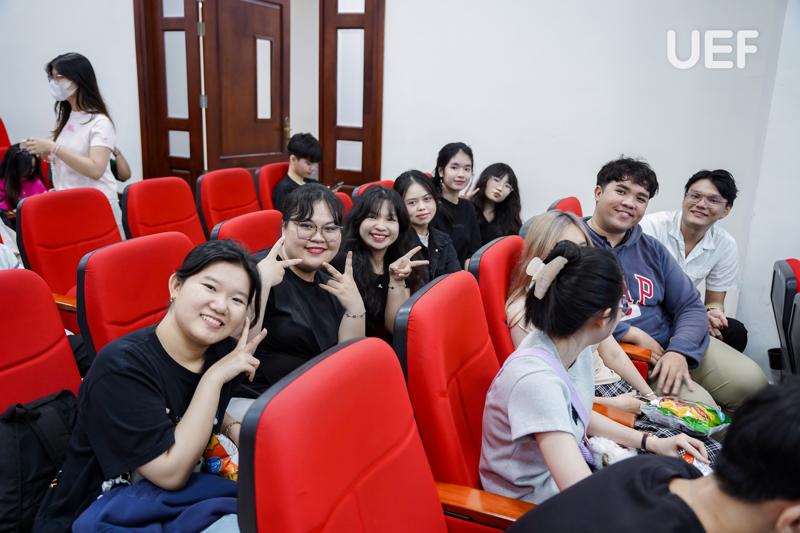
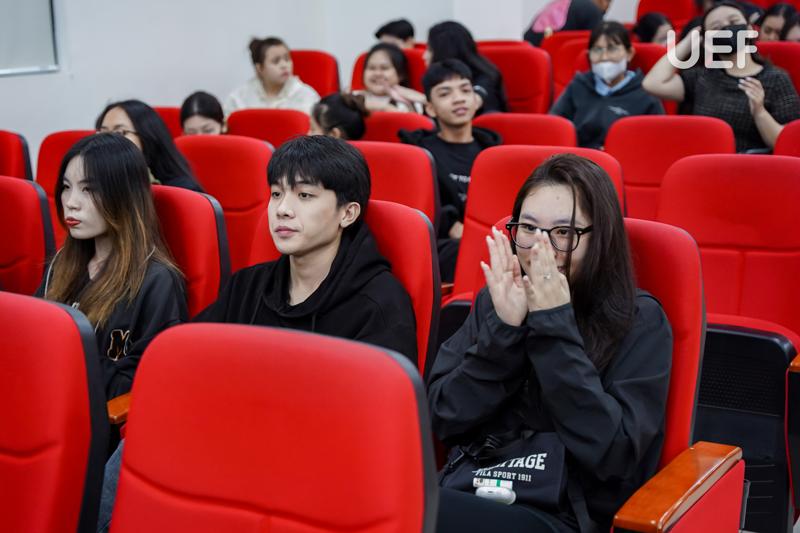
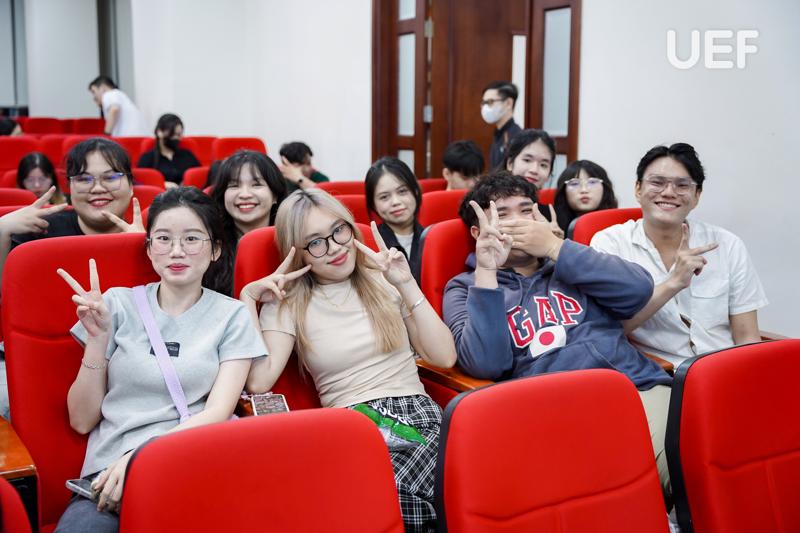
UEFers show strong interest in the practical insights shared by the speaker
The recent thematic seminar in the Human Resource Management course provided valuable practical knowledge, helping UEF students recognize the real-world applicability of academic subjects. As a result, they are motivated to continuously improve their knowledge and skills while still at university.
Through the session, students also had the opportunity to enhance their managerial competencies and gain clearer career directions through professional stories and real-world experiences related to workplace culture in the context of global integration. This also enables them to better adapt to the rapidly changing labor market and prepare for their future careers.
Ngoc Anh
RELATED NEWS


