


Enhancing Capacity in Teaching the "Signature" Project Design 1 Course for UEF Faculty
From February 2 to February 4, the UEF Project Design Training Center organized a training workshop on teaching methods for the Project Design 1 (PD1) course, continuing a series of activities to enhance professional skills during the 2025-2026 academic year.
The program aimed to help new lecturers gain a deep understanding of the philosophy, structure, and implementation methods of PD1—a course that carries UEF's unique hallmark in application-oriented and creative education.
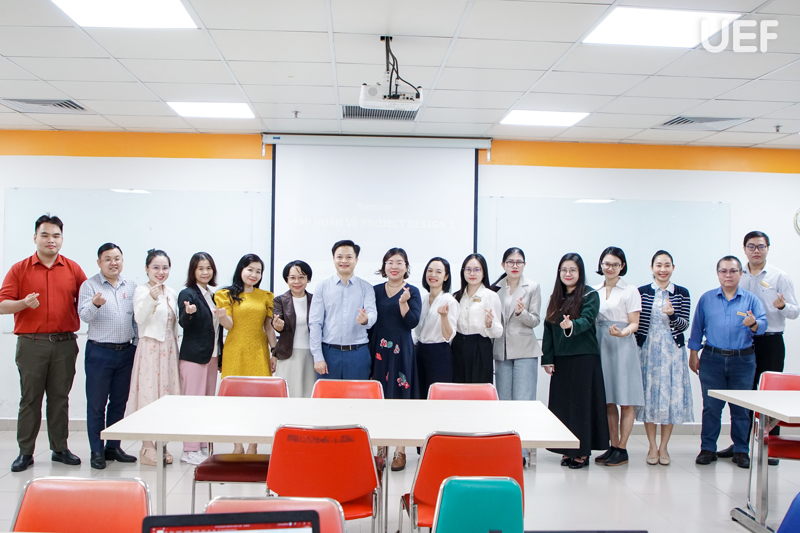


The training session focuses on clarifying the role of PD1 in forming problem-solving mindsets and creative capacity
Accompanying the teachers in the first training session were MSc. Nguyen Xuan Hung - Director of the Project Design Training Center, MSc. Ha Le Thu Hoai - Deputy Director of the Center, and the center's team of experienced lecturers. Through professional sharing and practical guidance, the program created an open space for exchange, focusing on core issues when implementing PD1 in teaching practice.
Project Design is a course system that UEF integrated into its curriculum many years ago, becoming a distinctive highlight in the students' learning journey. Reality shows that after each course, students have the opportunity to finalize highly applicable creative products, which receive positive evaluations from businesses.
Beyond forming teamwork skills or problem-solving mindsets, PD also creates a foundation for many students to approach scientific research and develop long-term project ideas right from their first years of university.
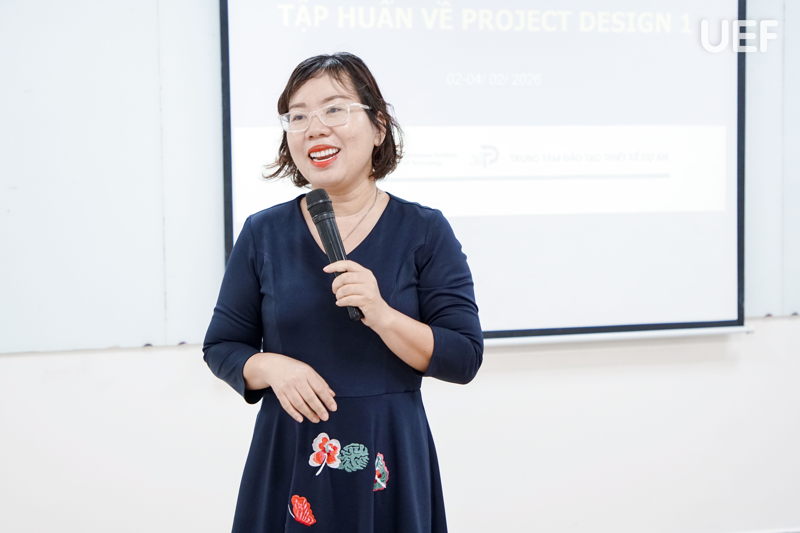
The class provides conditions for faculty to share experiences and unify teaching methods for UEF's "signature" course
At the training session on February 2, faculty members were introduced to a brief overview of the formation and the process of adopting the Project Design course system from the Kanazawa Institute of Technology (KIT, Japan) to UEF. On this basis, the program clarified the link between PD1 and PD2 within KIT's overall educational philosophy, while analyzing learning outcomes, the role of PD courses in the curriculum, and the principles of evaluating student learning results.

MSc. Nguyen Xuan Hung shares the philosophy and structure of the Project Design course in the curriculum
Specifically for PD1, the focus is placed on the capacity to discover and solve problems. The course utilizes the Design Thinking model with four pillars: Conceive - Design - Implement - Operate, implemented through a six-step process from identifying problems to proposing creative solutions. This is considered an important methodology that helps students practice systems thinking, practical analysis skills, and an innovative spirit within their specialized fields.
The training workshop was designed with a blend of theory and direct practice, where participating lecturers built mini-projects right in class. "Putting themselves in the learner's shoes" helped the teachers better sense the pace, requirements, and difficulties students might face during the PD1 process. Consequently, discussions revolved around creating appropriate project topics for each major, methods for organizing individual assessments within teamwork, and ways to support students in developing ideas logically and coherently.


UEF lecturers participate in discussions and professional exchanges on PD1 implementation methods
According to the plan, the training workshop continued on February 3 with the next steps in the PD1 process. On February 4, groups will present their final reports and complete the program with a certificate awarding activity for the participating lecturers.

Lecturers from the Project Design Training Center continue to guide faculty on project implementation steps in the next session

UEF faculty members practice continuously to master PD1 teaching methods during the training session on February 3
Through this training workshop, the UEF faculty team not only reinforced their teaching methods for the Project Design 1 course but also gained a deeper perspective on the students' learning journey. When PD1 is implemented consistently and closely linked with specialized knowledge, practical and creative ideas bearing the UEF hallmark will continue to be sparked, contributing to enhancing the training quality and academic identity of the University.