

UEF welcomes representative from IIT Gandhinagar (India) to discuss directions for cooperation
OCTOBER 23, UEF welcomed Prof. Amit Prashant, Head of External Relations, Department of Civil Engineering, Indian Institute of Technology Gandhinagar (IITGN), India. During the visit, both sides discussed directions for cooperation in international academic activities, education, and research.
On the same day, Prof. Amit Prashant hosted the workshop “Finance Professionals in the FinTech Era: Evolving Roles, Responsibilities and Skills”, organized by the Faculty of Finance and Accounting, to share his expert perspective on current shifts in the financial field amid the FinTech era. Welcoming the professor were Dr. Nhan Cam Tri, Vice President; Dr. Ngo Minh Hai, Vice President; and heads of relevant units.
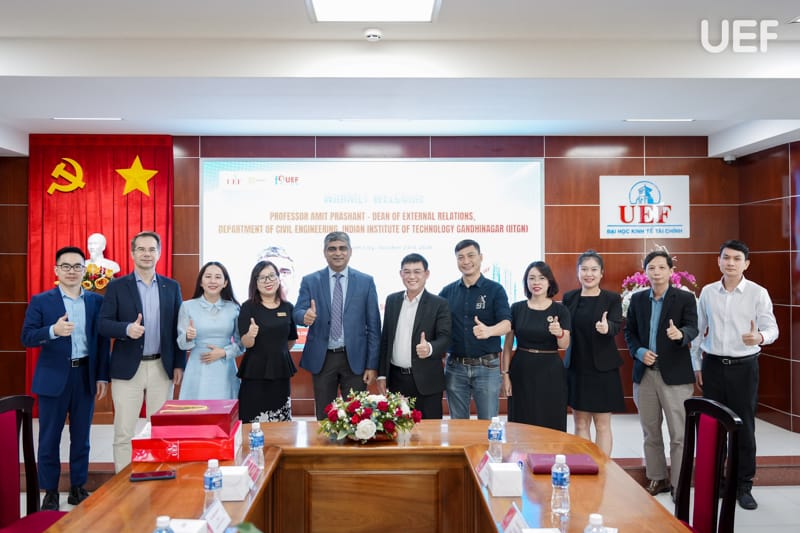
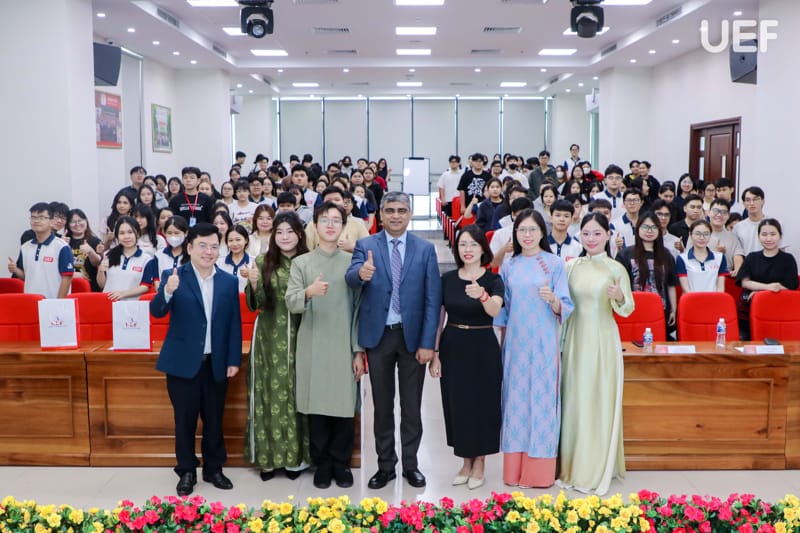
UEF welcomed the IIT Gandhinagar representative, expanding cooperation in international academic activities, education, and research
Discussing directions for cooperation in education, research, and student exchange
During the working session, UEF representatives presented key highlights of the international collaborative programs, focusing on student exchange activities, international internships, and academic and research cooperation. Both sides also discussed opportunities for collaborative postgraduate programs at IIT.
In addition, UEF suggested developing short-term study programs in India for students specializing in FinTech. This is one of the directions that offers them opportunities to gain exposure to international academic environments, update specialized knowledge, and experience the technology and innovation ecosystem in India.
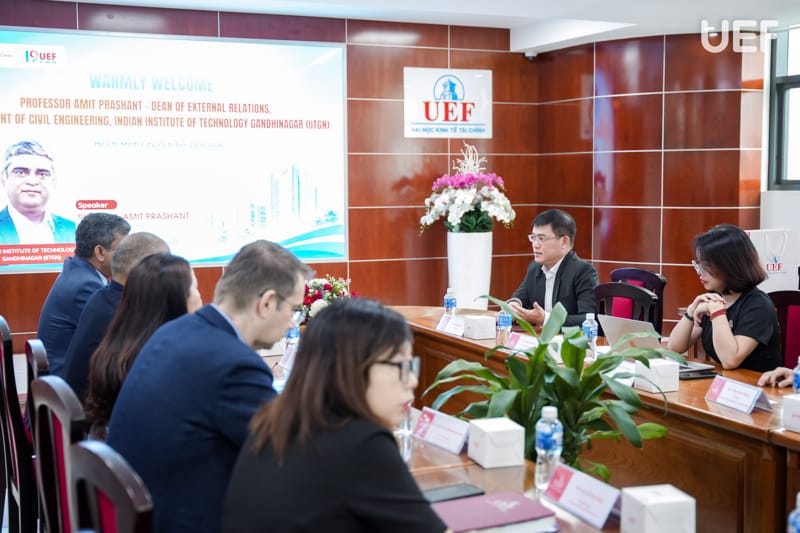
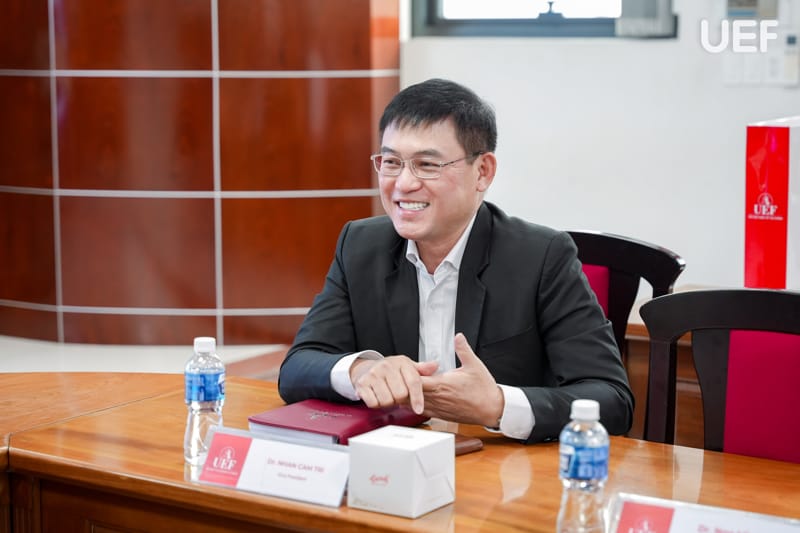
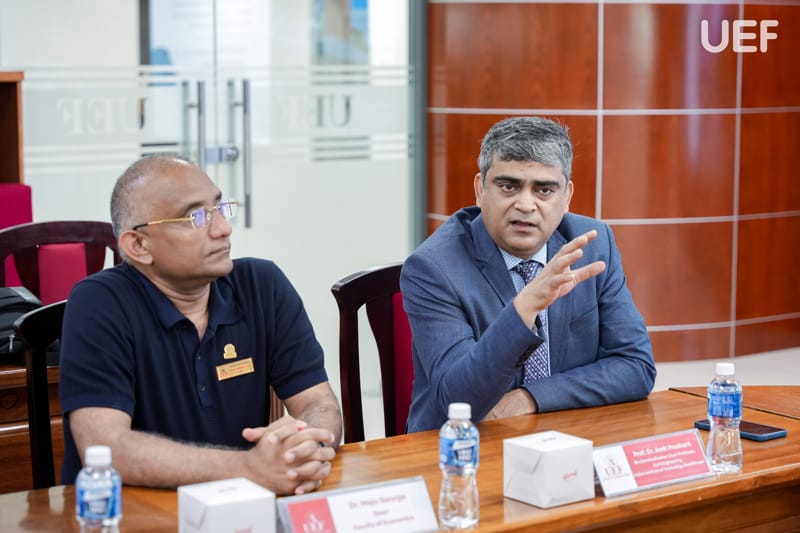
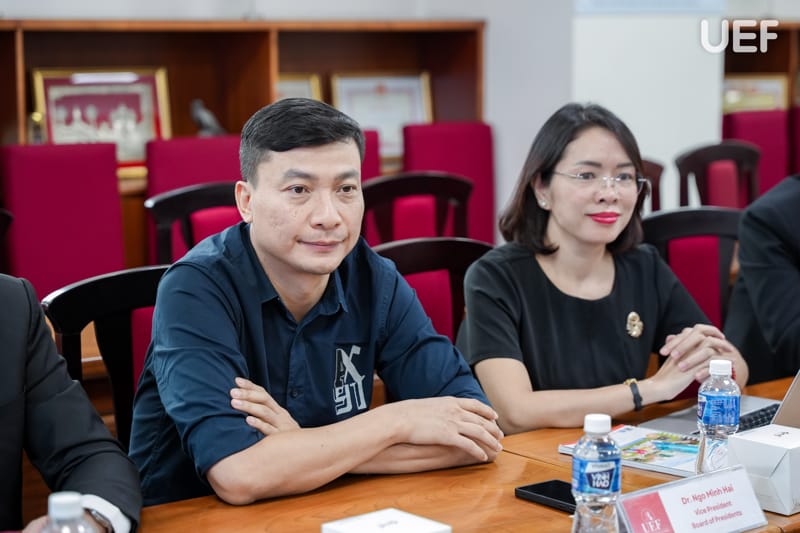
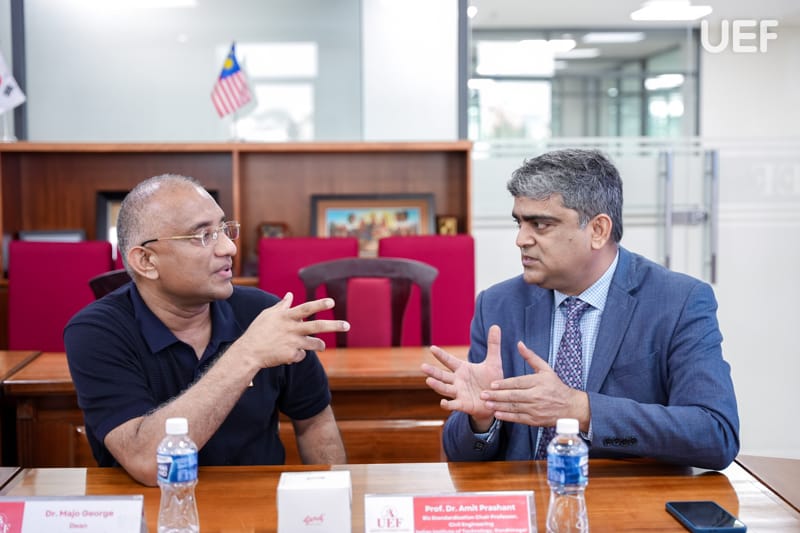
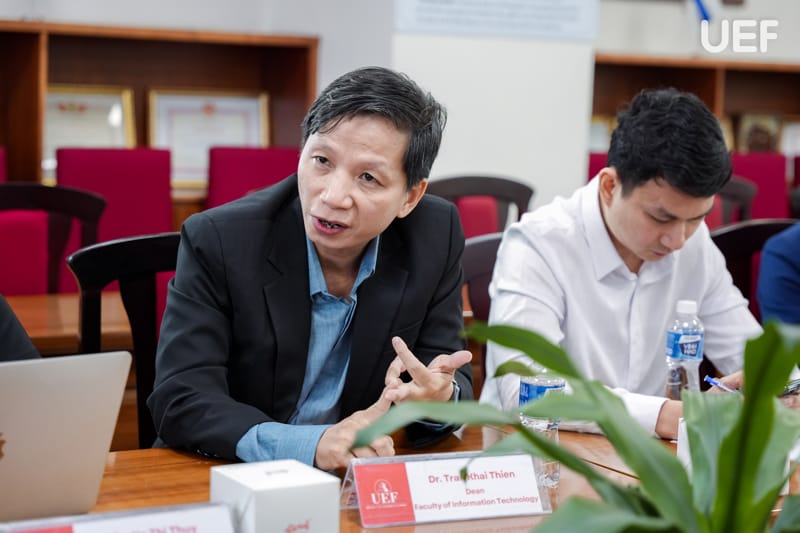
Prof. Amit Prashant and UEF representatives discussed a wide range of potential areas for collaboration
On IIT Gandhinagar's side, Prof. Amit Prashant introduced their development directions centered on interdisciplinary education, research, and corporate relations. According to the introduction, IITGN emphasizes developing a student-centered educational environment and integrating specialized knowledge with practical experience through internships at businesses, interdisciplinary research centers, laboratories, and the technology commercialization ecosystem. The University also builds an international cooperative network to increase opportunities for academic and research collaboration as well as student and lecturer exchange between educational institutions.
The workshop widened the perspective on the role of financial positions in the FinTech era
After the working session, Prof. Amit Prashant continued his sharing at the workshop “Finance Professionals in the FinTech Era: Evolving Roles, Responsibilities and Skills” held by the Faculty of Finance and Accounting. The workshop featured changes in financial activities, professional requirements, and the skills candidates need to adapt to the new labor market.
As the speaker shared, FinTech combines financial services and technology, marking a shift from manual data recording and processing to automated operations and system-driven, data-based decisions. This shift is reflected in increased transaction-processing efficiency and greater access to financial services. However, it also presents new challenges in cybersecurity, risk management, and compliance. Generally, areas such as digital payment, algorithmic lending, open banking, and automated asset management open up various career directions.
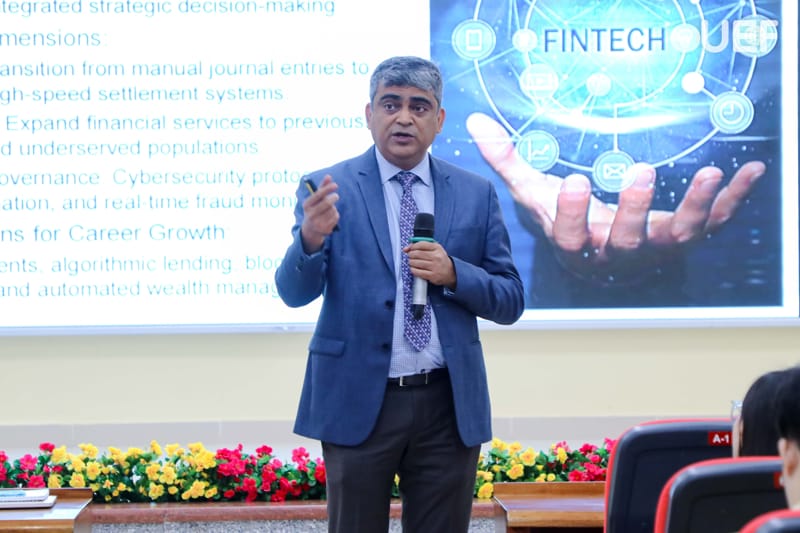
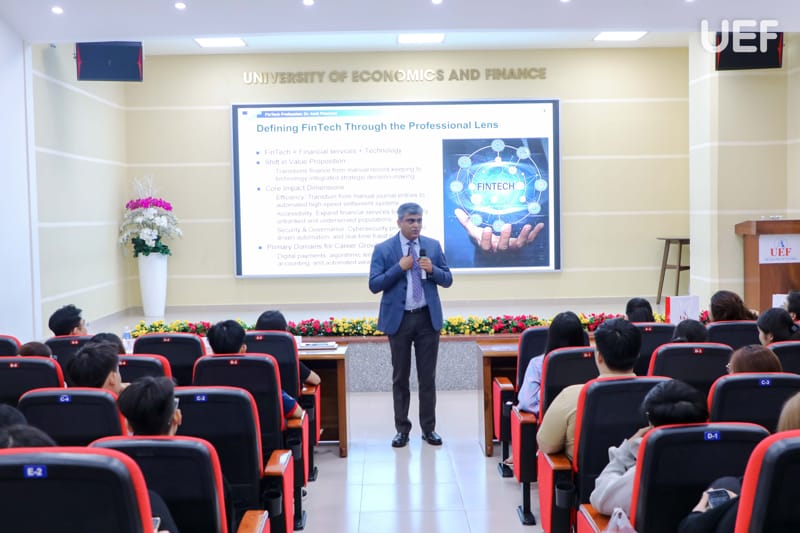
Prof. Amit Prashant shared professional perspectives on the shifts in FinTech as it develops
By analyzing the “5D” model, Digitalization - Demonetization - Disruption - Data - Development, Prof. Amit Prashant demonstrated the factors driving changes in the financial field. Through the example of the FinTech ecosystem in India with digital identity, e-KYC, and UPI, the professor illustrated the increasingly important role of real-time data, automation, and forecasting analytics in finance.
Another highlight is the shift from traditional finance specialists to workers who are capable of integrating technology into financial expertise. While traditional workers mainly rely on static data, historical reports, and manual processing, FinTech specialists now have to work with real-time data, apply forecasting algorithms, and automate the process, which requires them to constantly update knowledge, develop analytical thinking, and enhance the ability to catch up with technology.
Through the welcoming ceremony and the thematic workshop, UEF continued to expand opportunities to connect with international educational institutions and provided a basis for students to access global specialized knowledge and current trends in their industry. The discussion on cooperation in education, research, and FinTech suggested directions for academic development and international experiences that align with the modern labor market.
Center of Communication and Marketing







