

UEF students explore modern entrepreneurship with PUM Netherlands Senior Expert
On the entrepreneurship journey, an outstanding idea can mark the beginning, but what defines how far it can go is the ability to listen to customer insights and experiment with business models to make adjustments. This was the topic of the Masterclass workshop “Innovation and Entrepreneurship - Traditional vs Modern Trends” delivered by Dr. Frans Stel, PUM Netherlands Senior Expert, on October 20 at UEF.
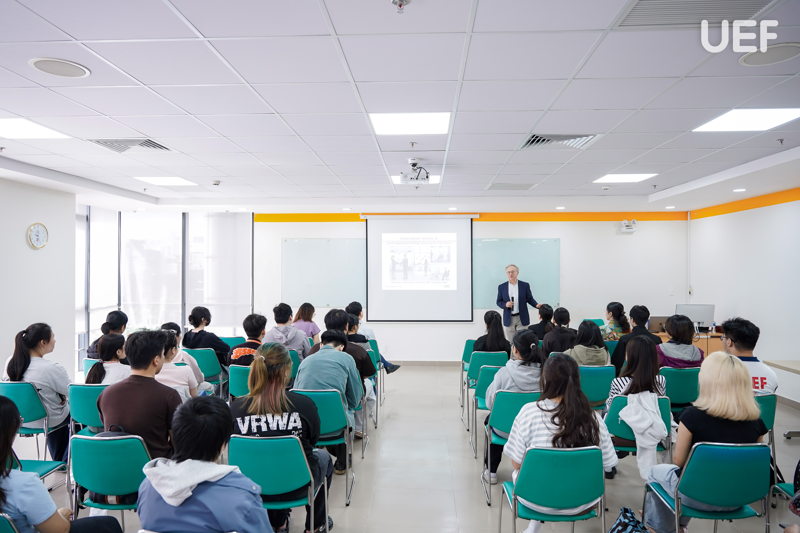
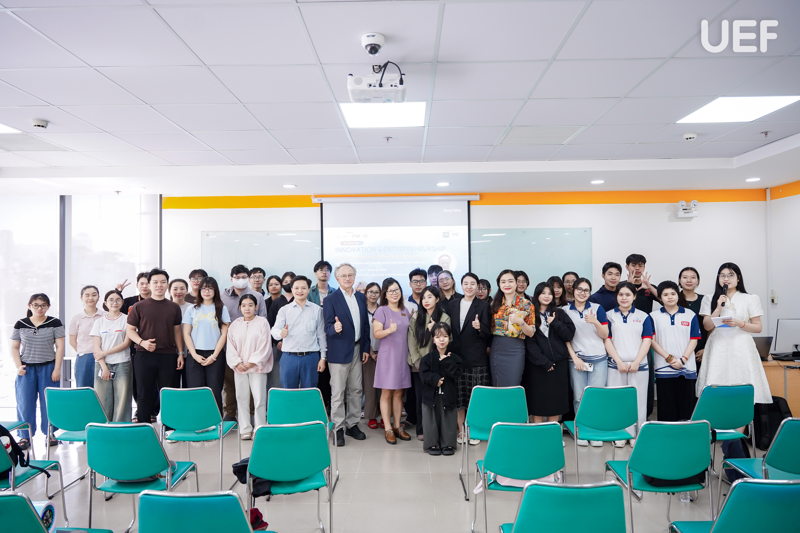
Bringing an international perspective on entrepreneurship closer to UEFers, the workshop encouraged the spirit of creative learning and practice
As part of the activity series “Innovation, Coaching Training, and Research Collaboration,” the workshop presented UEFers with a comparative perspective on traditional and modern entrepreneurship models and introduced effective methods for learning, project development, and idea testing in a dynamic business environment.
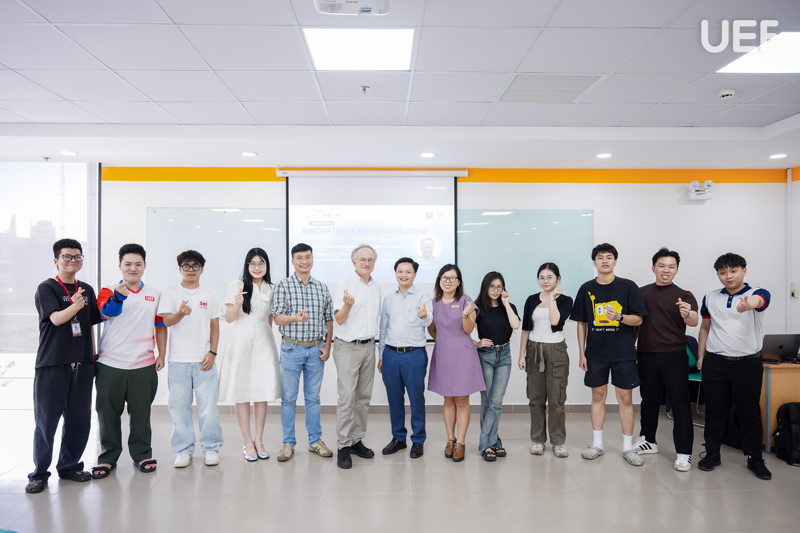
Attending the workshop were Dr. Ngo Minh Hai, Vice President; Mr. Nguyen Xuan Hung, Director of the UEF Center of Innovation, Entrepreneurship and Project Design; Ms. Tran Thi My Phuong, Director of the Center of Service-Learning; Ms. Ha Le Thu Hoai, Deputy Director of the UEF Center of Innovation, Entrepreneurship and Project Design; and UEF students.
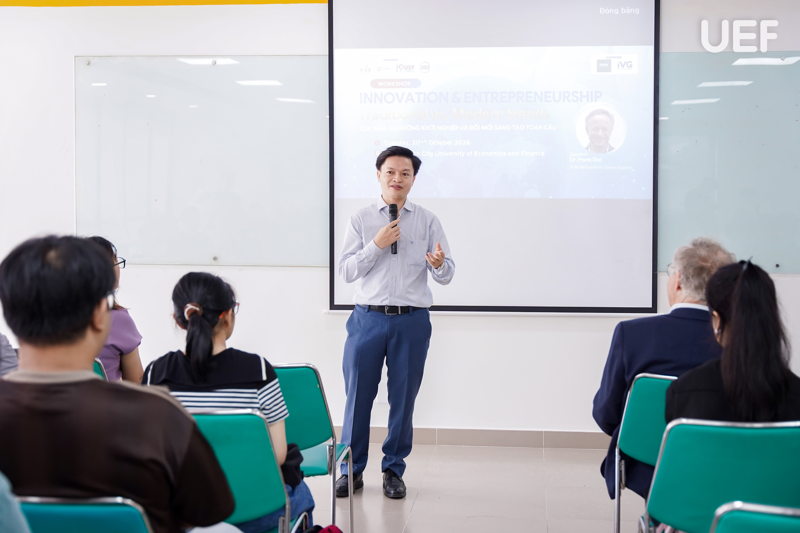
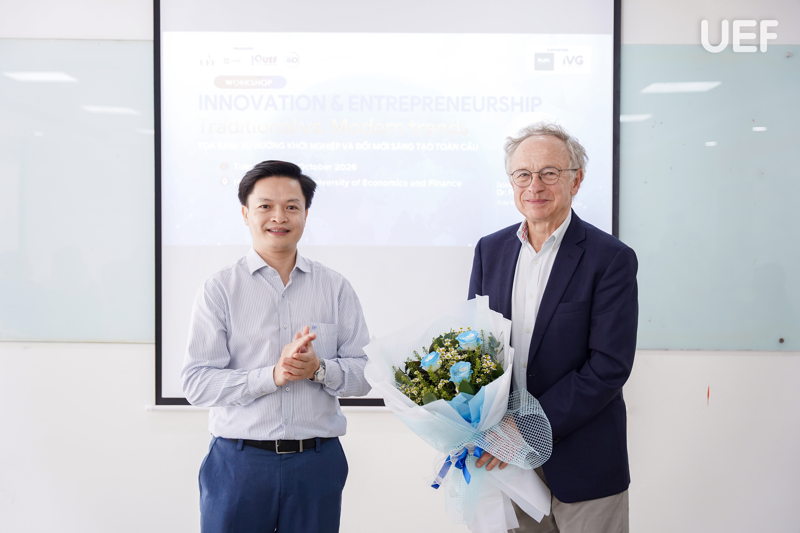
Mr. Nguyen Xuan Hung expressed his appreciation to the speaker and encouraged students to gain more knowledge from this workshop
In the professional sharing session, Dr. Frans Stel analyzed changes in the entrepreneurship ecosystem by comparing two different approaches. In traditional models, businesses usually develop through a linear process, focus on refining the final product, utilize internal resources, and aim to maximize financial profit. Meanwhile, modern entrepreneurship prioritizes flexibility, the ability to experiment continuously, and understanding consumers' practical demands.
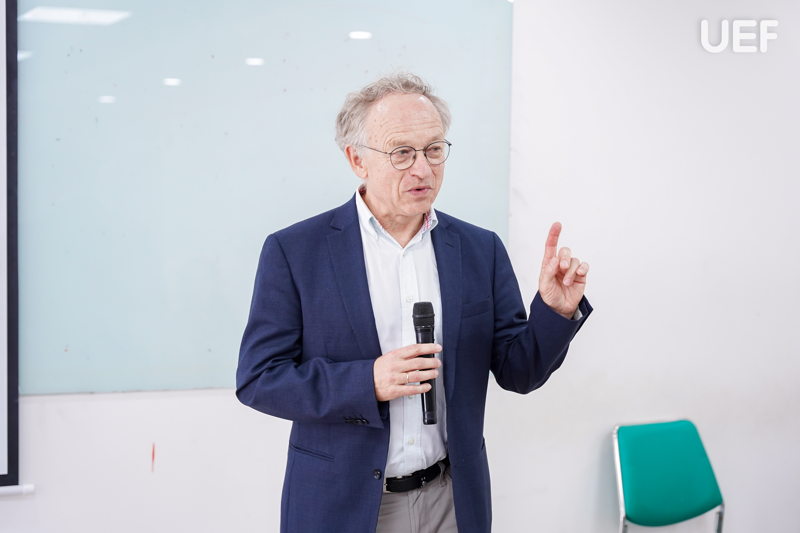
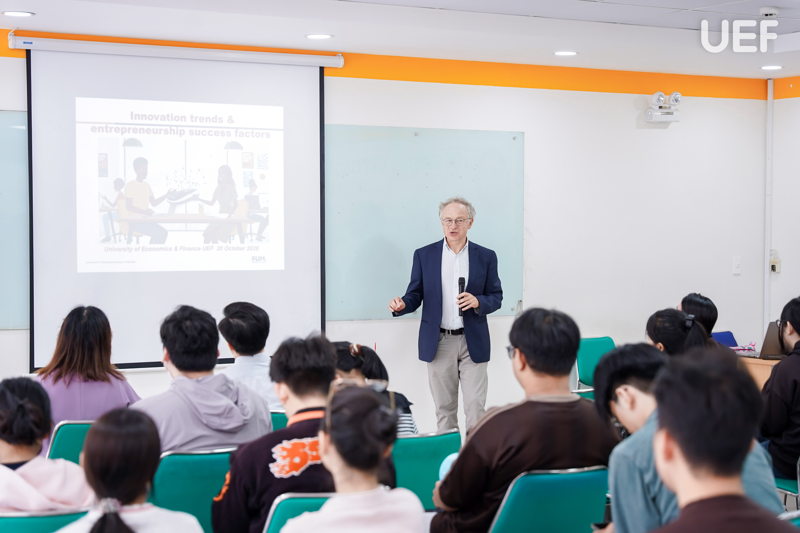
Dr. Frans Stel analyzed the role of experimentation, measurement, and continuous learning in the process of startup development
The shift in entrepreneurship is also reflected in how enterprises establish values. Innovation allows organizations to utilize external resources. Besides, models such as digital platforms, software as a service (SaaS), subscription models, and circular economy diversify how businesses design products and approach the market. In addition, sustainable development, aligned with environmental, social, and governance standards (ESG), is now integrated into strategic development.
According to Dr. Frans Stel, learning is more effective when learners have an opportunity to solve problems, test ideas, and collaborate with people who have different perspectives.
Learning methods such as Challenge-Based Learning, Design Thinking, Lego Serious Play, and Game-Based Learning were introduced as useful tools for brainstorming ideas, increasing interaction, and developing problem-solving skills. Coaching and 1:1 mentoring activities are also part of the process.
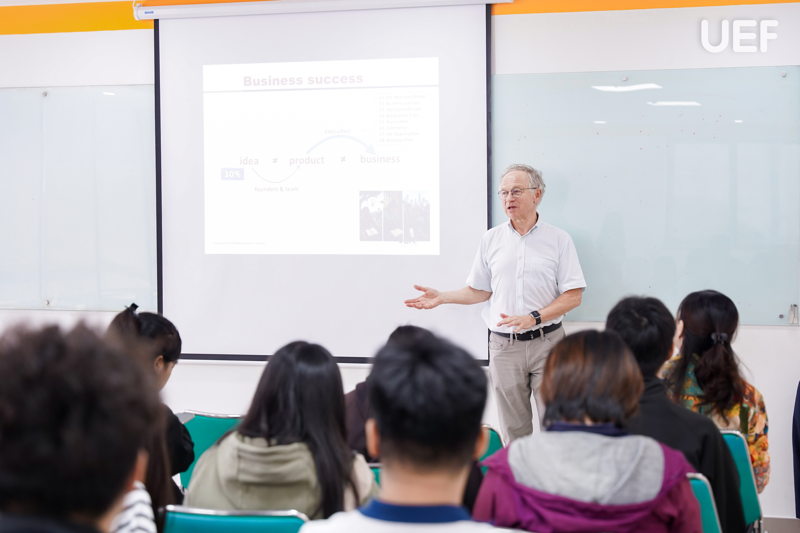
The presentation on learning methods that enhance creativity and problem-solving skills
In the Q&A session, Dr. Frans Stel directly addressed students’ concerns about challenges in the beginning of the entrepreneurship journey. One of them was not to be obsessed with the product and forget customers’ actual problems. Besides, a team's lack of diversity in expertise can limit an entrepreneur’s ability to examine the problem from different perspectives and find a comprehensive solution.
Having addressed their concerns, the speaker encouraged students to apply Lean Startup and Design Thinking to develop a minimum viable product (MVP) to quickly test it at a low cost and receive feedback before upscaling.
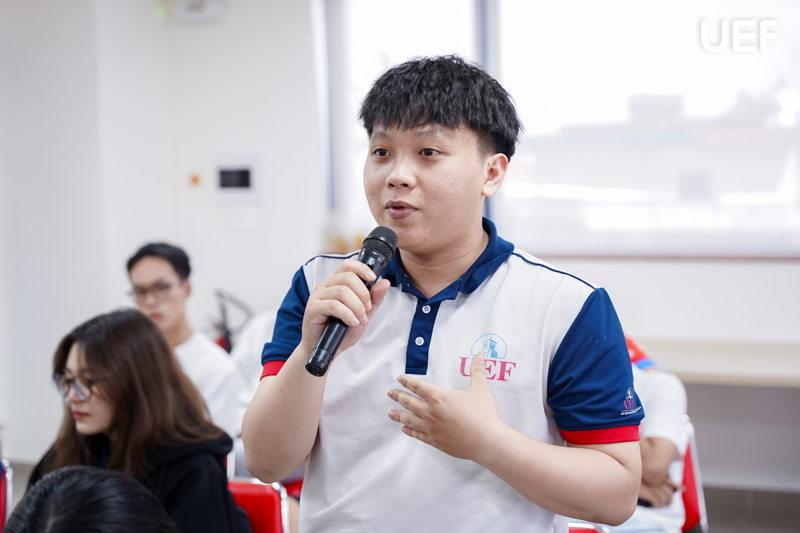
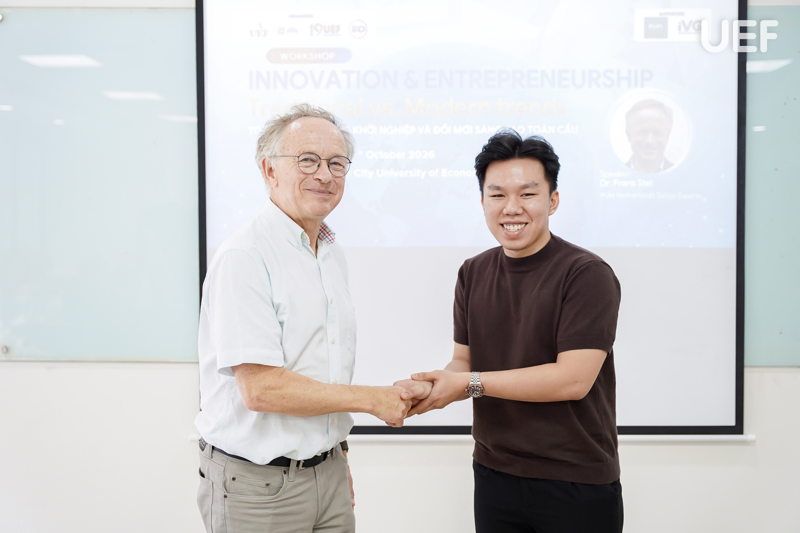
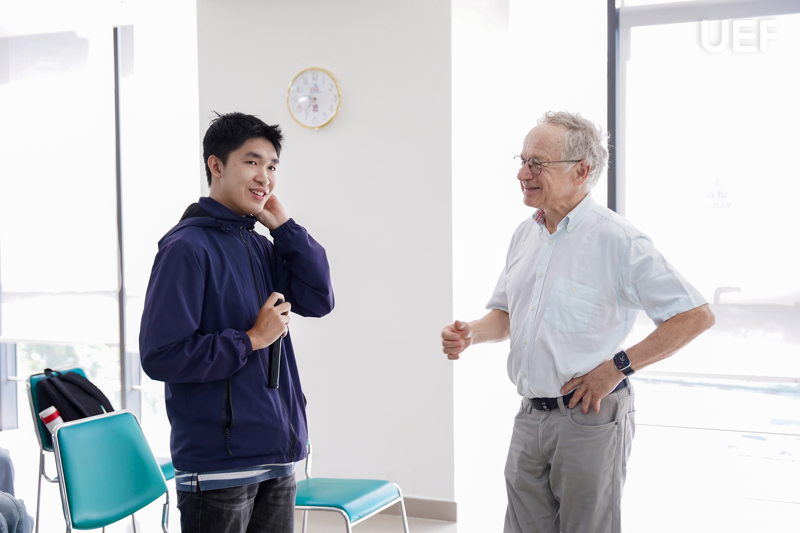
UEFers actively discussed with the international expert in English and raised practical questions
There were three messages emphasized throughout the workshop: proactively adapt through testing and adjustments, validate customer demand before scaling, and aim for sustainable values for the community and environment besides business objectives.
The masterclass with the PUM Netherlands Senior Expert created more space for UEF students to gain exposure to international knowledge, practice professional communication, and directly discuss current issues in the entrepreneurship ecosystem.
Through the activity series “Innovation, Coaching Training, and Research Collaboration.” UEF continues to promote connections between students and international experts, expand experiential learning opportunities, and encourage students to develop creativity, critical thinking, and the ability to implement their projects.
Center of Communication and Marketing







